
When a loved one is diagnosed with dementia, one of the biggest questions families face is where they should live. Should they stay at home with support? Or would a care home be safer? There is no single right answer — but understanding the options clearly can help you make the decision that is right for your family.
The Case for Staying at Home
For many people with dementia, remaining at home is powerfully beneficial. Home is familiar. The furniture, the smells, the sounds, the view from the window — all of these provide comfort and orientation that a new environment simply cannot replicate. Research consistently shows that people with dementia experience less anxiety and confusion in environments they know well. At home, your loved one can maintain their existing routines, keep their personal possessions and photographs around them, stay connected to their neighbourhood and community, and receive one-to-one attention from a consistent, familiar carer.
The Case for a Care Home
There are circumstances where a care home becomes the right choice. If a person with dementia has very high needs — frequent falls, significant night-time disturbance, complex medical requirements — round-the-clock staffed care may be safer than what homecare alone can provide. Care homes also offer a social environment that can benefit some people. The key question is always: what does this individual need, and where can those needs best be met?
What Dementia Care at Home Looks Like
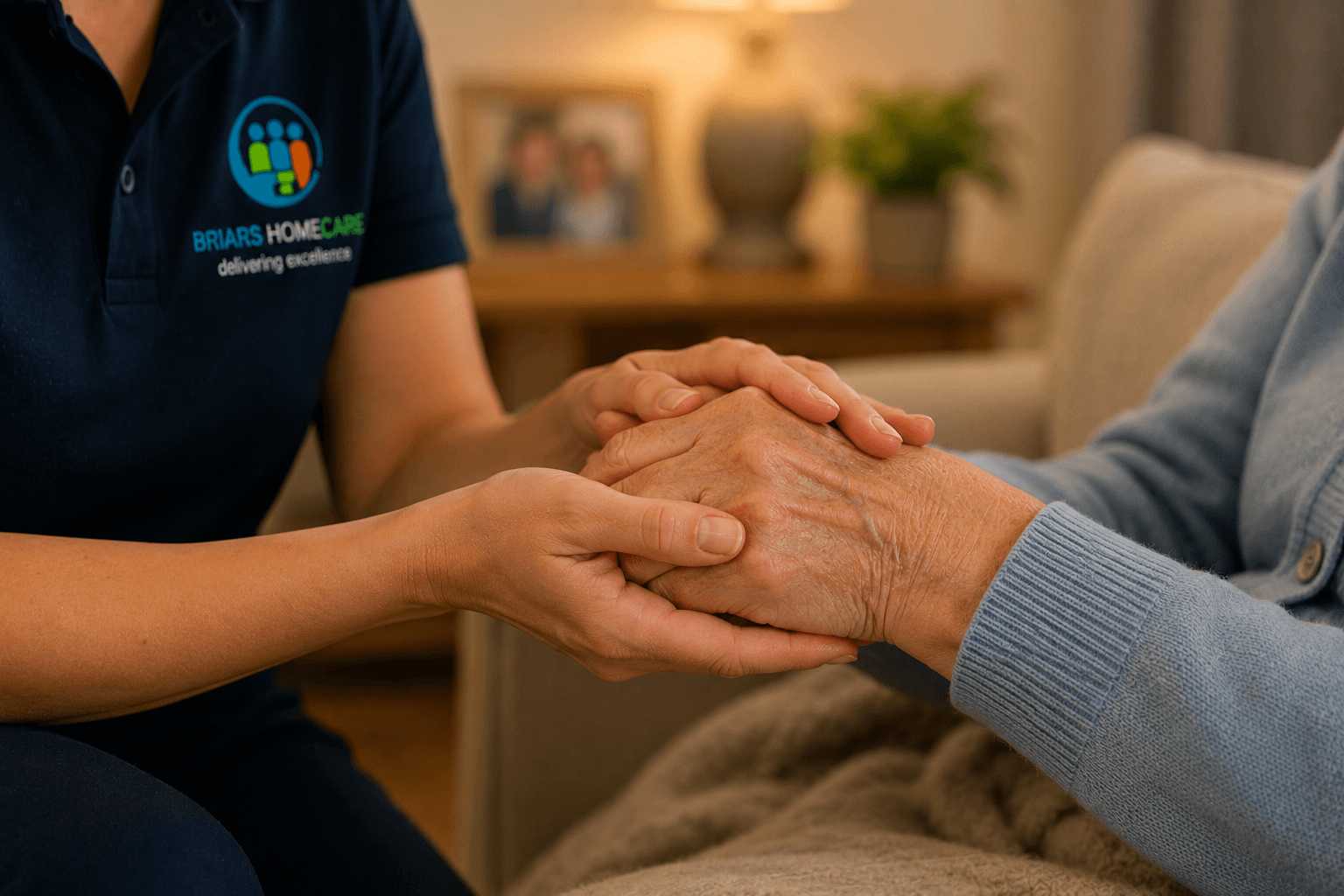
Our dementia care service is built around consistency and familiarity. The same carers visit at the same times, following the same routines. We work with families to understand the person — their history, their preferences, the things that calm or distress them — and we build care around that knowledge. Visits can range from a daily morning call to multiple visits throughout the day and night.
Cost Comparison
Care home fees in Lancashire typically range from £800 to £1,400 per week. Homecare costs depend on the number and length of visits required — many clients receive excellent support for significantly less, particularly in the earlier stages of dementia. Lancashire County Council and Blackpool Council may fund dementia care following a needs assessment if the person meets the financial eligibility threshold.
Our Recommendation
We believe that for most people in the early to moderate stages of dementia, staying at home with professional support delivers a better quality of life. If you would like to discuss your situation in confidence, please call us on (01253) 851600. We are happy to visit, assess, and give you an honest view of what we can provide.